




Planning to study MBBS and wondering which country offers the right learning environment? The quality of medical laboratories, practical training and clinical exposure can play an important role in deciding where to study medicine. These factors help students move beyond classroom theory and develop practical skills through laboratory work, simulation training and hospital-based learning.
India and Uzbekistan offer different learning environments for medical education. India has a large and diverse healthcare system, established medical colleges and the potential for exposure to a wide range of patient cases. At the same time, selected medical universities in Uzbekistan provide modern medical laboratories, simulation facilities and structured clinical training through affiliated hospitals.
When comparing the two options, students should look beyond tuition fees and consider the quality of medical labs, availability of diagnostic equipment, hands-on practical sessions, hospital affiliations, patient exposure, clinical departments and faculty supervision. These factors can influence the overall learning experience during medical education.
For Indian students, studying medicine in Uzbekistan can be an option worth exploring because selected universities combine laboratory-based learning with practical and hospital training. However, facilities and clinical exposure can differ from one university to another, so checking the specific university, its infrastructure and hospital affiliations is essential before admission.
This guide compares medical education in Uzbekistan and India, with a focus on advanced medical labs, clinical exposure, practical training and hospital experience. Understanding these differences can help students evaluate their options and choose a medical university that aligns with their academic, financial and career goals.
MBBS in Uzbekistan vs. India: Clinical Exposure Comparison
Clinical exposure is one of the most important aspects of medical education because it helps students apply their classroom knowledge to real-world patient care. For Indian students comparing MBBS in Uzbekistan vs India, factors such as patient exposure, hospital training, clinical departments, practical skills, simulation facilities and faculty supervision can make a significant difference to their learning experience.
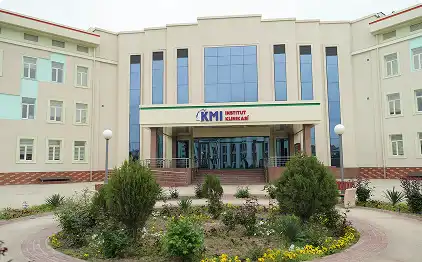
While India has a large and diverse healthcare system that can provide exposure to a wide range of medical cases, selected medical universities in Uzbekistan offer structured clinical training through affiliated hospitals and simulation-based facilities. KMI University Uzbekistan provides students with opportunities to gain practical clinical experience through hospital-based training, clinical departments, and hands-on learning as part of their medical education.
Clinical exposure can vary considerably from one medical university to another. Therefore, students should evaluate the specific university, its hospital affiliations, clinical curriculum, patient exposure, and practical training facilities before making a decision.
MBBS in Uzbekistan vs India: Clinical Exposure at a Glance
| Clinical Exposure Factor | MBBS in India | MBBS in Uzbekistan |
|---|---|---|
| Patient Exposure | Students can encounter a large and diverse patient population, particularly at busy teaching hospitals. | Patient exposure depends on the university, affiliated hospitals and location. |
| Clinical Training | Includes structured hospital-based clinical training and practical skills development. | Selected universities combine hospital-based training with practical and simulation-based learning. |
| Hospital Exposure | Medical colleges generally have affiliated teaching hospitals for clinical education. | Universities may have partnerships or affiliations with hospitals and medical centres for clinical training. |
| Clinical Specialities | Students can gain exposure to medicine, surgery, paediatrics, obstetrics and gynaecology and other departments. | Clinical rotations can include major medical and surgical specialities, depending on the university's programme. |
| Practical Skills | Students develop clinical skills through supervised hospital postings and practical sessions. | Practical skills may be developed through clinical postings, skills laboratories and simulation facilities. |
| Simulation Training | Available at many established medical institutions, although facilities vary by college. | Simulation-based training is available at selected medical universities and can support hands-on skills practice. |
| Class & Learning Environment | Class sizes vary considerably between government and private medical colleges. | Some universities may offer smaller learning groups, but students should verify the actual class size. |
| Faculty Interaction | Depends on the college, faculty strength and student-to-teacher ratio. | The level of individual faculty interaction varies by university and teaching structure. |
| Overall Clinical Experience | Strong potential for exposure to diverse cases through India's extensive healthcare network. | Can provide an international clinical learning environment, depending on the university and affiliated hospitals. |
Advanced Medical Labs Abroad: India vs. Uzbekistan

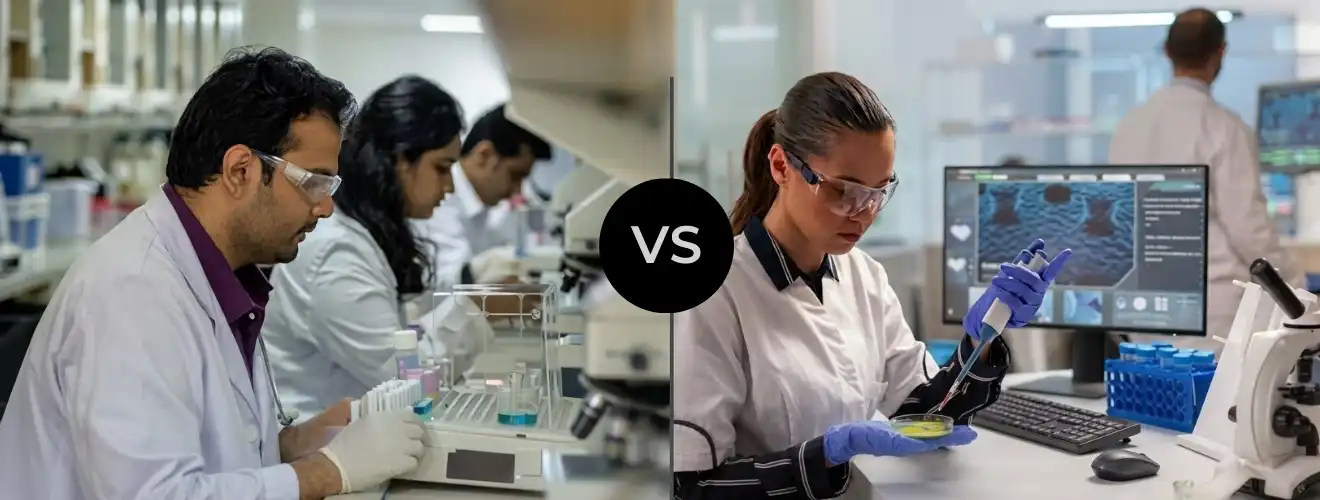
Medical laboratories are an important part of MBBS education because they allow students to apply theoretical concepts through practical experiments, diagnostic procedures, and laboratory-based learning. When comparing MBBS in Uzbekistan vs. India, the availability of modern laboratories, simulation facilities, diagnostic equipment, and practical training opportunities can be an important factor for students and parents to consider.
1. Medical Labs in Indian Medical Colleges
Medical laboratory facilities in India can vary considerably between institutions. Leading government medical colleges such as AIIMS, along with well-established private medical universities, may offer advanced laboratories, simulation facilities, research centres, and modern diagnostic equipment.
These facilities support practical learning in subjects such as pathology, microbiology, biochemistry, anatomy, and physiology, helping students understand how laboratory investigations contribute to diagnosis and patient care.
However, the quality and availability of laboratory infrastructure depend largely on the individual medical college. Therefore, students should evaluate the facilities, equipment, teaching resources, and practical exposure offered by a particular institution rather than comparing India as a whole.
2. Advanced Medical Labs in Uzbekistan
Selected medical universities in Uzbekistan have invested in modern laboratories, simulation centres, and practical training facilities to support medical education. Universities such as KMI University provide students with opportunities to develop practical knowledge through laboratory-based learning and clinical skills training.
Depending on the university, students may have access to facilities for pathology, microbiology, biochemistry, diagnostic procedures, and clinical skills simulation. Such facilities can help students strengthen their understanding of medical investigations and practise clinical techniques in a controlled learning environment.
For Indian students considering MBBS in Uzbekistan, it is important to assess the specific university’s laboratory infrastructure rather than assuming that every medical university offers the same facilities. Before choosing an Uzbekistan medical college, students should evaluate factors such as accreditation, hospital affiliations, clinical exposure, faculty, infrastructure, fees, and student support. Checking the available equipment, practical sessions, simulation facilities, affiliated hospitals, and opportunities for hands-on training can help students make a more informed decision.
Role of an MBBS Abroad Consultant

When planning for MBBS in Uzbekistan vs. India, students and parents often need reliable guidance to understand the differences in education, clinical exposure, medical infrastructure, fees and admission requirements. A trusted MBBS abroad consultant can help families compare these factors and make a more informed decision based on the student’s academic profile, budget and career plans.
An experienced consultant can provide guidance on university selection, eligibility requirements, tuition fees, accommodation, clinical exposure, laboratory facilities and the visa process. Instead of selecting a university based only on its fee structure, students can receive assistance in evaluating important factors such as the university’s curriculum, teaching facilities, affiliated hospitals and practical training opportunities.
A consultant can also help students understand the differences between studying medicine in India and pursuing MBBS in Uzbekistan for Indian students. This may include comparing the overall cost, academic environment, duration of the programme, clinical training and available student support.
Why Choose Uzbekistan for MBBS?
Choosing MBBS in Uzbekistan can be an attractive option for Indian students who are looking for an international medical education experience with a focus on practical learning, clinical training and affordability. Compared with studying medicine in India, selected medical universities in Uzbekistan offer modern teaching facilities, simulation-based learning and opportunities for clinical training through affiliated hospitals.
One of the key factors students consider is the learning environment. Some universities may have smaller learning groups, which can allow students to interact more closely with faculty and participate more actively in practical sessions. Access to simulation laboratories and clinical skills facilities can also help students practise medical procedures in a controlled environment before applying their knowledge during hospital training.
Another important consideration is clinical exposure. Depending on the university and its affiliated hospitals, students may gain exposure to different medical departments and patient cases as part of their clinical training. This practical experience can help students develop communication, observation and basic clinical skills alongside their theoretical studies.
Affordability is another reason why Indian students explore Uzbekistan for medical education. Tuition fees and day-to-day living expenses can be comparatively manageable at selected universities, although the actual cost varies depending on the institution, accommodation and lifestyle. Students should calculate the complete cost of education before making a decision.
For students considering MBBS abroad, Uzbekistan can therefore be worth exploring when the right university offers suitable academic facilities, clinical training, hospital affiliations and student support. However, students should always verify the university’s current credentials, programme structure and applicable requirements for practising medicine in India before taking admission.
Conclusion
Clinical exposure in Uzbekistan can be an important consideration for Indian students exploring MBBS abroad. Selected medical universities offer practical training, simulation-based learning, medical laboratories and hospital-based clinical experience, although the facilities and training structure can vary between universities.
For students comparing MBBS in Uzbekistan vs India, the right choice should not be based only on fees or infrastructure. Factors such as clinical exposure, affiliated hospitals, practical training, academic facilities, university credentials and the overall cost of education should be carefully evaluated before admission.
With the right university and proper guidance, MBBS in Uzbekistan can provide students with an international learning environment while helping them develop practical medical skills. HSA EduWorld, an experienced MBBS abroad consultant, can help students and parents compare suitable universities, understand admission requirements and navigate the process of studying MBBS abroad.

 Education