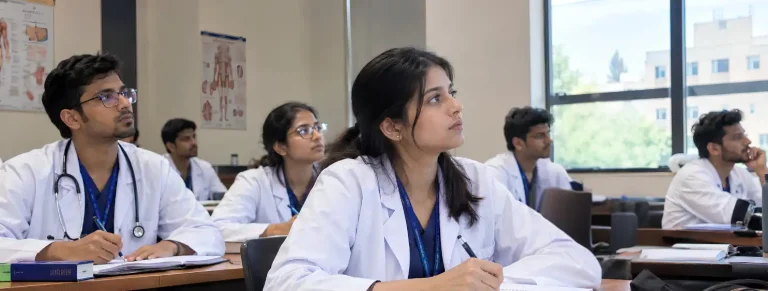







Studying medicine abroad requires more than attending lectures and passing examinations. International medical students need academic guidance, practical training, faculty mentorship, and learning resources to develop essential medical knowledge and skills.
Academic Support Abroad includes faculty mentorship, structured medical education, clinical training, language assistance, academic assessments, remedial classes, and examination guidance. These services help international medical students understand difficult subjects, improve practical skills, and adapt to unfamiliar education systems. Support availability varies by university and program.
For Indian students planning MBBS abroad, understanding university academic support is essential when choosing the right institution. Countries such as Georgia offer English-taught medical programs, but academic facilities and student support arrangements differ between universities.
This guide explains the academic support available to international medical students, its importance, and what students should check before selecting a medical university abroad.
What Academic Support Do International Medical Students Get Abroad?
International medical students may receive several forms of academic assistance during their education. Depending on the university, these services can include faculty mentorship, practical training, clinical supervision, language classes, remedial teaching, digital learning resources, and examination guidance.
Students should also understand which MBBS abroad degrees are valid in India and review the applicable NMC requirements before selecting a medical university.
| Academic Support | Benefits for Medical Students |
|---|---|
| Faculty mentorship | Helps students understand difficult medical subjects |
| Structured curriculum | Provides organized progression through medical sciences |
| Clinical training | Develops practical knowledge and clinical skills |
| Language assistance | Supports communication during clinical activities |
| Academic assessments | Identifies learning gaps and areas for improvement |
| Remedial classes | Provides additional help with challenging subjects |
| Digital learning | Supports revision and independent study |
| Academic counselling | Helps students manage educational challenges |
The availability of these facilities depends on the university, so students should verify the services offered before admission.
Why Is Academic Support Important for International Medical Students?
Moving abroad for medical education involves several adjustments. Students must adapt to unfamiliar teaching methods, different examination systems, cultural differences, and demanding medical subjects.
Some common challenges include:
- Understanding a new education system
- Adjusting to English-medium medical education
- Managing extensive medical syllabuses
- Preparing for university examinations
- Learning the local language
- Balancing academic responsibilities with student life
A supportive academic environment can help students overcome these challenges by providing access to teachers, learning resources, and appropriate academic guidance.
For parents, understanding the university’s student support arrangements is equally important. It helps them evaluate whether their child will have access to the assistance needed throughout medical education.
1. Structured Medical Curriculum and Academic Planning
A structured medical curriculum helps students progress from foundational medical sciences to clinical subjects in an organized manner.
Medical education generally includes subjects such as anatomy, physiology, biochemistry, pathology, pharmacology, and clinical disciplines. Students gradually develop the scientific knowledge required to understand diseases, diagnosis, treatment, and patient care.
Universities offering MBBS in Georgia follow their respective approved medical curricula, with theoretical and practical learning incorporated according to program requirements.
Students should evaluate the following academic aspects before selecting a university:
- Course duration and semester structure
- Subject progression across academic years
- Theory and practical learning components
- Examination and assessment methods
- Clinical training arrangements
- Academic resources available to students
A clearly explained curriculum helps students understand their academic responsibilities and plan their preparation throughout the course.
2. Faculty Mentorship and Academic Guidance
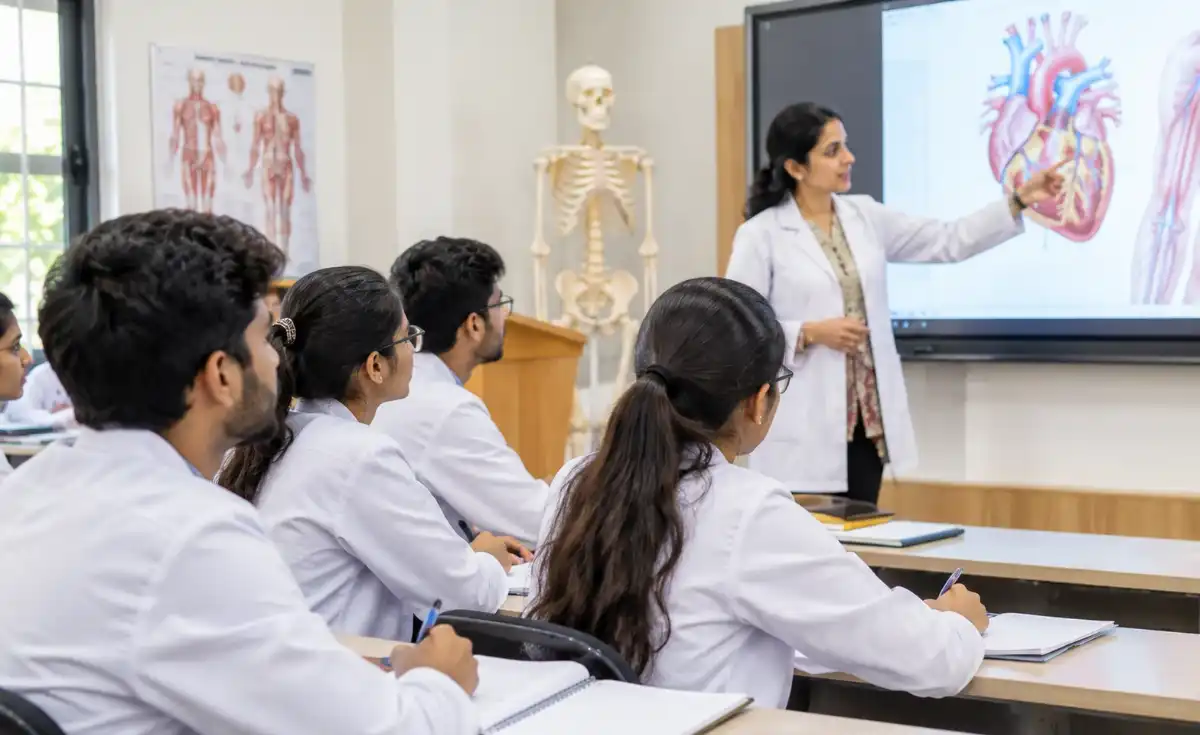
Faculty mentorship is an important part of medical education because students frequently encounter complex subjects that require additional explanation and practice.
Depending on university arrangements, academic guidance may include:
- Clarifying difficult medical concepts
- Discussing examination preparation strategies
- Providing feedback on academic performance
- Helping students identify learning gaps
- Recommending suitable learning resources
Accessible faculty members can make it easier for students to ask questions, participate in discussions, and improve their understanding.
Before admission, students should ask whether formal academic mentoring is available, how professors can be contacted outside lectures, and whether students receive additional guidance when they experience academic difficulties.
3. English-Medium Education and Language Support
Language is another important consideration for Indian students studying medicine abroad.
Many Georgian medical universities offer English-taught programs for international students. However, studying medicine in English does not eliminate the need to learn the local language.
Students may need local-language knowledge during clinical rotations, patient interactions, and everyday communication.
Language-related academic support may include:
- Medical terminology sessions
- Communication skills development
- Local language classes
- Guidance for patient interaction
- Practice in medical communication
Learning the local language can improve communication during clinical training and help students understand the healthcare environment.
Students should also confirm the language of instruction and clinical communication requirements before choosing a medical university.
4. Clinical Exposure and Practical Training Support
Medical education involves both theoretical knowledge and practical learning. Clinical exposure allows students to observe healthcare professionals, understand patient conditions, and gradually develop essential clinical skills.
Students can also explore how clinical exposure in Georgia works, including hospital training and practical learning opportunities for medical students.
Depending on the university curriculum, practical learning may involve:
- Clinical skills laboratories
- Simulation-based learning
- Demonstrations and practical sessions
- Case-based discussions
- Supervised hospital rotations
- Clinical learning under qualified professionals
For students planning MBBS in Uzbekistan, it is important to understand when clinical training begins, which hospitals are affiliated with the university, and how clinical supervision is organized.
Students should ask about actual clinical responsibilities at each stage of training. Hospital exposure does not automatically mean independent patient care, and practical activities must follow the applicable training and supervision requirements.
5. Internal Assessments, Remedial Classes, and Doubt Clearing
Regular academic assessments help students evaluate their understanding before major university examinations.
Assessment methods may include written examinations, practical assessments, assignments, presentations, and other curriculum-based activities.
Some universities may also provide additional academic assistance, including:
- Extra tutorial sessions
- Doubt-clearing classes
- Revision sessions
- Academic counselling
- Additional learning support
These resources can help students identify academic difficulties early and improve their understanding before examinations.
Students can also explore MBBS in Uzbekistan vs India: Advanced Labs to understand differences in medical laboratory facilities and practical learning environments.
6. Guidance for FMGE, NExT, and Other Licensing Exams
Indian students studying medicine abroad should understand the licensing requirements applicable to their intended country of practice.
For students planning to practise in India, eligibility and registration requirements must be checked under the applicable National Medical Commission regulations.
FMGE is the current screening examination framework for eligible foreign medical graduates. NExT implementation remains subject to official regulatory developments.
Students can benefit from understanding applicable examination requirements early in their medical education.
Useful preparation activities include:
- Reviewing applicable examination eligibility
- Building strong foundational medical knowledge
- Following a consistent study schedule
- Practising examination-style questions
- Using appropriate preparation resources
- Tracking official regulatory updates
Read our guide on FMGE vs NExT and their differences to understand the examination pathways.
How Can an MBBS Abroad Consultant Help With Academic Planning?

Selecting the appropriate university is as important as understanding the academic support available within it.
A reliable MBBS abroad consultant can help Indian students and parents evaluate university-specific academic arrangements before admission.
Professional guidance may include:
- Comparing medical universities and their curricula
- Understanding admission requirements
- Reviewing clinical training arrangements
- Explaining language and academic expectations
- Assisting with admission documentation
- Providing pre-departure counselling
- Helping families understand student support facilities
HSA EduWorld assists students with university selection, admission procedures, documentation, and guidance for studying medicine abroad.
Students planning MBBS in Georgia or Uzbekistan can explore their options and understand the admission process before making a decision.
What Should Students Check Before Choosing a Medical University Abroad?
Before finalizing a university, students should evaluate its academic environment and available student support services.
| University Selection Question | Why It Matters |
|---|---|
| Is the medical curriculum clearly explained? | Helps students understand academic progression |
| Are faculty members accessible for guidance? | Supports learning and doubt resolution |
| When does clinical training begin? | Clarifies practical learning opportunities |
| Which hospitals provide clinical training? | Helps evaluate clinical arrangements |
| Which hospitals provide clinical training? | Helps evaluate clinical arrangements |
| Is local language learning available? | Supports patient communication |
| Are academic assessments conducted regularly? | Helps track academic progress |
| Is additional academic support available? | Helps students manage difficult subjects |
| Are applicable NMC requirements satisfied? | Important for students planning to practise in India |
Students should obtain answers directly from universities and verify applicable regulatory requirements rather than relying exclusively on promotional claims.
Conclusion
Academic Support Abroad plays an important role in helping international medical students succeed in their medical education. Faculty mentorship, structured curricula, clinical training, language assistance, and examination guidance support students in developing medical knowledge and practical skills.
For Indian students planning MBBS in Georgia or other countries, evaluating academic support, clinical training, and university facilities is essential before admission. Understanding what academic support international medical students receive abroad helps students and parents make informed decisions.
With HSA EduWorld, an experienced MBBS abroad consultant, students can explore suitable medical universities, understand admission requirements, and receive guidance throughout their study abroad journey.

 Education