



Moving to another country for medical school involves more than choosing a university and arranging your admission. For Indian students planning to study in Georgia, everyday life matters too. One question that often comes up is, ‘Will I be able to adjust to the weather?’
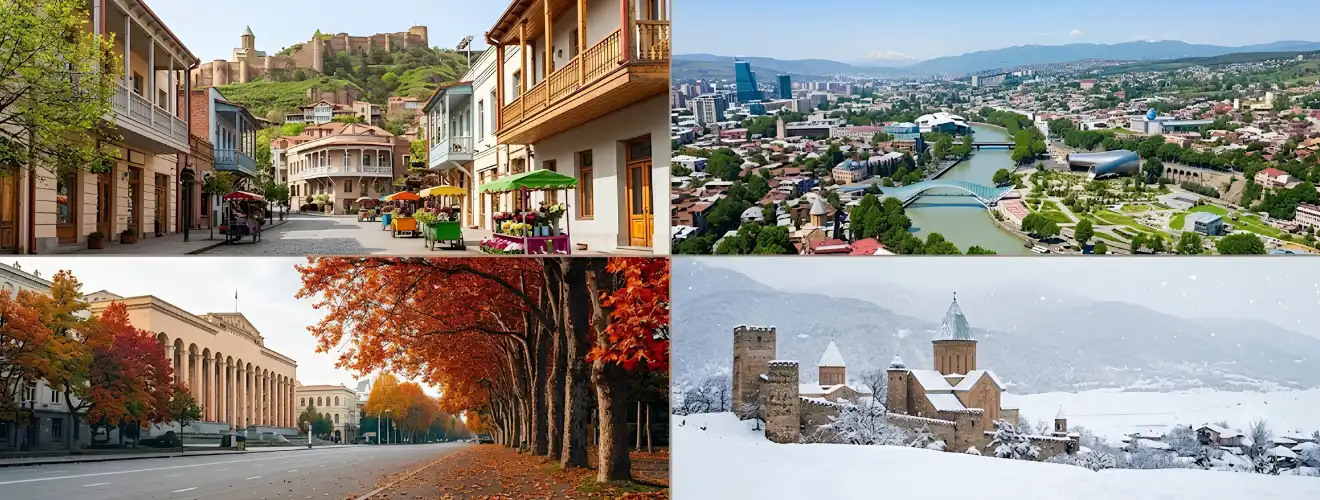
On a positive note, Georgia witnesses four different seasons of the year. Therefore, students will get an opportunity to enjoy all four seasons of the year, whether it is winter, summer, spring, or autumn. But there is a need for mentioning that the climate of Georgia varies significantly from city to city, elevation, and proximity to the Black Sea.
For students planning to pursue MBBS in Georgia, understanding these seasonal changes can make packing, budgeting, and adjusting to student life much easier.
What Is the Climate in Georgia Like?
So, what is the climate in Georgia really like?
For Indian students planning to pursue MBBS in Georgia, understanding the country’s climate is important because weather conditions can vary significantly by region. The climate is influenced by mountainous areas, lowlands, and the proximity to the Black Sea and the Caucasus Mountains. Western regions usually experience a more humid climate, while eastern regions are generally drier.
According to the World Bank, western Georgia has a milder and more humid climate, while eastern lowlands tend to be drier. Mountainous areas are considerably colder compared with the lowlands.
Georgia’s official tourism information also highlights the country’s diverse climatic conditions, ranging from humid subtropical conditions to cold alpine and glacial environments.
For Indian students pursuing MBBS in Georgia, this climate can feel quite different from what they are accustomed to in India, particularly during the winter months. Understanding these regional and seasonal differences can help students prepare for accommodation, clothing, travel, and everyday life before arriving.
Georgia Weather by Season
The best way to learn about weather conditions in Georgia is to know about its four seasons.
| Season | Typical Months | What Students Can Expect |
|---|---|---|
| Spring | March–May | Mild temperatures, increasing rainfall, and pleasant days |
| Summer | June–August | Warm to hot days, generally suitable for outdoor activities |
| Autumn | September–November | Cooler temperatures, changing leaves, and occasional rain |
| Winter | December–February | Cold weather, with snow possible depending on location |
Experience may vary from city to city. For instance, the experience in Tbilisi is different from that in Batumi in the same month.
Spring in Georgia: March to May
Spring is a season that marks a gradual transition from winter to the warm months.
March may still experience cooler conditions, especially during morning and evening times, while April and May may be more comfortable. The spring season also experiences higher levels of precipitation.
For the students, the spring season becomes a perfect time for adjustment, as the temperatures would neither be too cold like during winter nor too hot like in summer.
If you travel to Georgia during the spring season, it will be wise to have a few layers of clothes on you.
Summer in Georgia: June to August
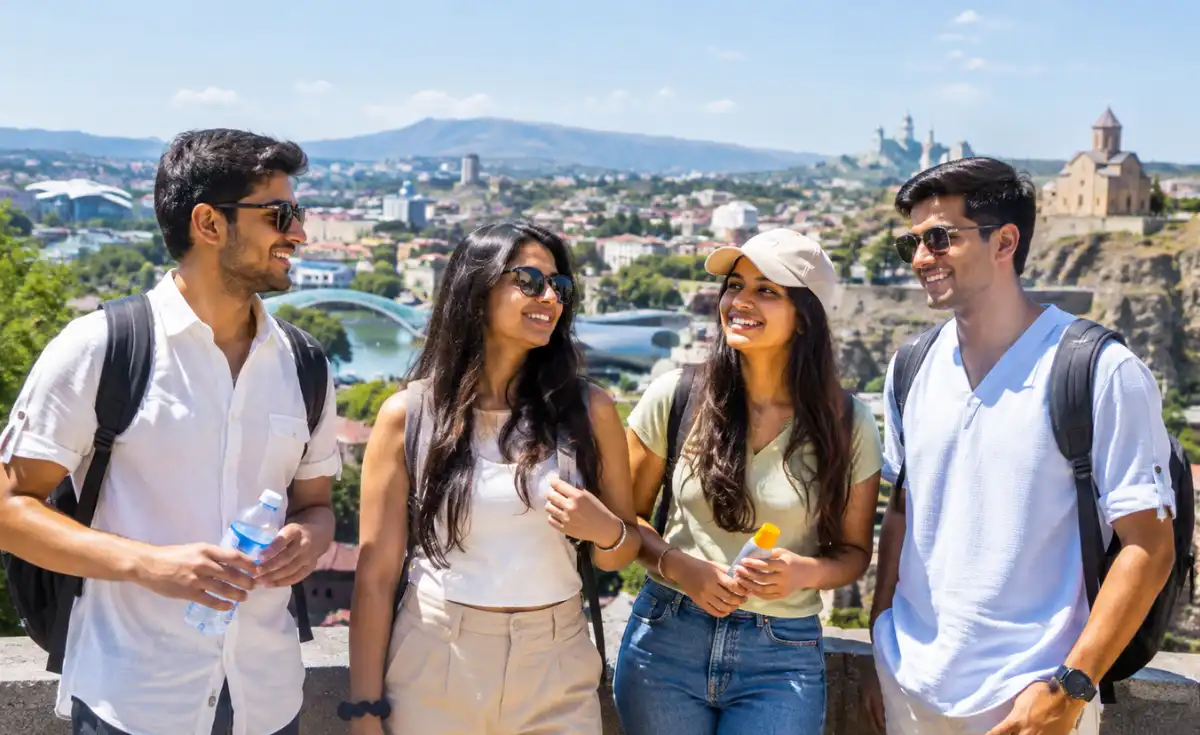
Summers are usually warm, and some places can even get very hot.
For instance, according to the climate statistics, the warmest month of the year for Tbilisi is July, when the average temperature is about 24°C, but the temperature during the daytime is much higher.
Eastern Georgia can have hotter summers compared to the places located close to the Black Sea, which can have humid climatic conditions.
As far as the Indian students are concerned, the summer season might be comparatively easy to adjust to, unlike the winter season, because the weather is similar to some places in India. The degree of warmth and humidity varies according to the cities.
Clothing in light shades, sunscreen, and comfortable shoes can help cope with the summer season.
Autumn in Georgia: September to November
Cooler weather slowly sets in following the end of summer.
The month of September can be moderately warm, but October and November are definitely cooler. There may also be more rain and cloudy days in some areas.
From a student’s point of view, autumn is a great opportunity to enjoy everything Georgia has to offer away from school. The change in weather and cooler temperatures will make it easier to walk around the city.
On the other hand, it will get quite chilly come November.
Winter in Georgia: December to February
Winter is the season that Indian students are likely to be most curious about.
Georgia does indeed have cold winters, and there is some snowfall. However, the winters do not uniformly affect the entire country.
The winters in Tbilisi are cold, with the coldest month being January. Official climate statistics indicate that the average temperature in January is approximately 1°C, while in July the average temperature is 24°C. There is also some snow in Tbilisi, but there are years when the snowfall is more or less.
Mountainous regions are much colder.
This implies that Indians cannot plan to pack for the winter season in Georgia in the way they normally do for the winter season back home.
Tbilisi vs Batumi: Is the Weather Different?
Yes. The difference can be quite significant.
Tbilisi, found in the eastern part of Georgia, has cold winters and hot summers. Batumi, found along the shore of the Black Sea, has a humid subtropical climate.
| Factor | Tbilisi | Batumi |
|---|---|---|
| Climate | Relatively dry continental influence | Humid subtropical |
| Winter | Cold | Mild and wetter |
| Summer | Warm to hot | Warm, humid |
| Rainfall | Comparatively lower | Much higher |
| Snow | Possible | Rare in the city |
| Main consideration | Winter cold and summer heat | Humidity and frequent rain |
According to Batumi’s official information on tourism, there is an average annual temperature of 13-14.5°C along the coast; January is about 6°C, while August is 24.5°C. It should be added that this area gets much more rain since it is located near the Black Sea.
It becomes very important when choosing a place to live during your studies.
Is Georgia's Climate Difficult for Indian Students?
The larger challenge will probably be the changing seasons and not the actual climate.
If you’ve grown up in areas with a warmer climate, you might feel a bit out of place at first in the cold weather in Georgia. The snow, freezing weather, and shorter days might take some getting used to.
But what you can do to prepare for this is:
- Purchasing proper winter clothing prior to your arrival or right after
- Layering clothing instead of wearing just one thick coat
- Carrying waterproof footwear for rainy and snowy days
- Keeping yourself hydrated, especially during warmer months
- Checking the local weather forecasts on a regular basis
- Travelling accordingly based on the season
Most importantly, what you must keep in mind is that there isn’t just one kind of weather in Georgia.
How Does the Climate Affect MBBS Students?
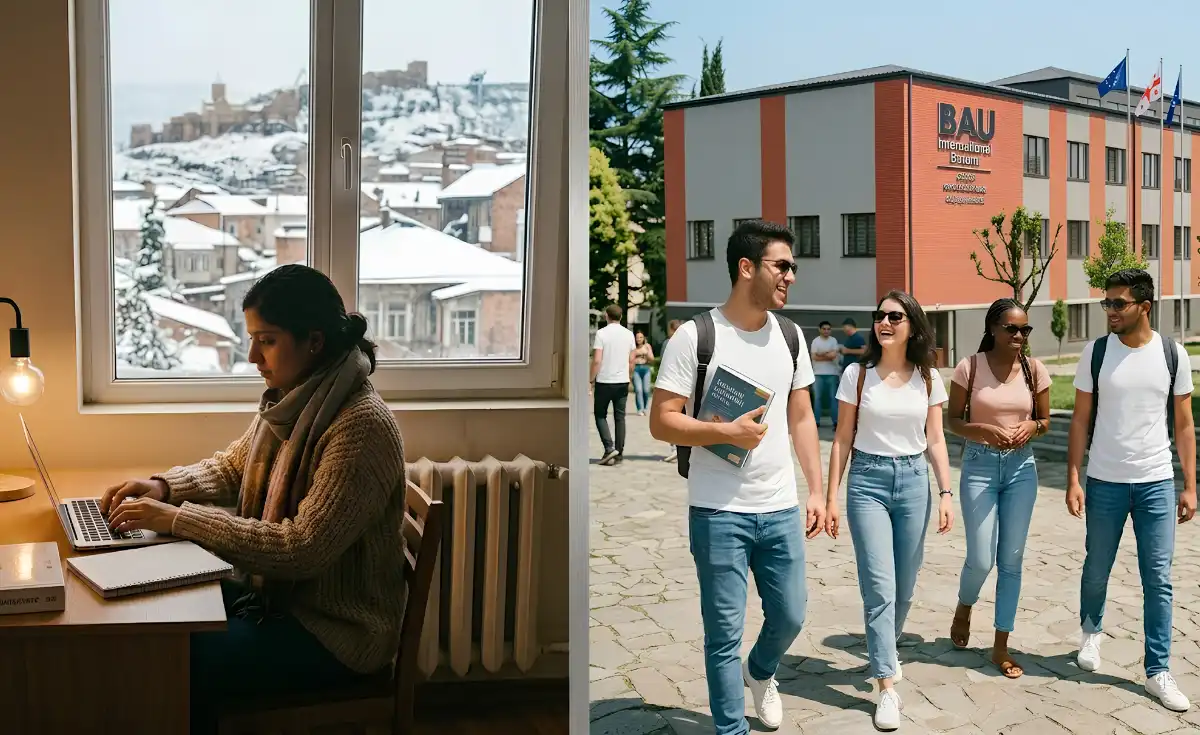
When it comes to students studying MBBS in Georgia, weather will affect daily activities but not academics.
Winter is characterized by cold weather, hence making students stay indoors most of the time. Therefore, it is essential that students wear warm clothes, especially when going to their accommodation.
Summer gives an opportunity to participate in various outdoor activities as well as explore Georgia during holidays.
Apart from this, one must think about the weather when looking for suitable accommodation. Having good heating in winter, good ventilation in summer, and being closer to the university makes life easier.
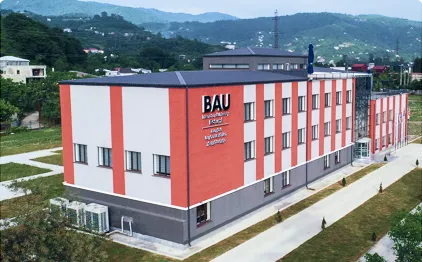
Apart from weather, students should also consider the overall living environment, accommodation, food, transportation, and academic support when choosing a university. BAU International University, Georgia offers facilities designed to support international students throughout their studies.
What Should Indian Students Pack for Georgia?
Seasonal packing not only helps save money but is convenient too.
| Essential | Why It Helps |
|---|---|
| Warm winter jacket | Important for cold months |
| Thermal layers | Useful during colder winter days |
| Waterproof shoes | Helpful during rain and snow |
| Sweaters and hoodies | Easy to layer |
| Light summer clothes | Suitable for warmer months |
| Umbrella | Useful during rainy periods |
| Comfortable walking shoes | Practical for daily student life |
There is no need for you to pack an entire winter wardrobe from India. Some students may prefer buying additional winter clothing after arriving, depending on their needs and budget. Before travelling, it is also worth understanding the faculty and global exposure at Georgian universities to make a well-informed decision about your medical education.
Is Georgia's Climate Suitable for Indian Students?
There is no one-size-fits-all solution because weather comfort level is subjective.
However, it can be confirmed that Georgia has a four-season climate, which varies greatly depending on regions. A climate description from the World Bank provides additional insight into the effect of altitude and proximity to the Black Sea on temperature and precipitation in Georgia.
For Indian students considering study in Georgia, understanding these differences before travelling can make the transition smoother.
If you have decided to pursue MBBS in Georgia, climate factors should be taken into account together with recognition of universities, programs, fees, accommodation, etc.
Wrapping Up
For Indian students, the main climate difference in Georgia is not simply that it has four seasons, but that weather can vary significantly between cities and regions. Tbilisi generally experiences colder winters and warmer, drier summers, while Batumi has milder winters with higher humidity and rainfall. Mountainous areas can be considerably colder, so students should consider their university location when preparing for life in Georgia.
Understanding the local weather can help students plan their clothing, accommodation, travel, and daily routine before arriving. However, climate is only one part of choosing where to study medicine. University recognition, tuition fees, clinical exposure, accommodation, and medical education quality should also be considered.
If you are planning to study MBBS in Georgia, HSA EduWorld, an experienced MBBS abroad consultant, can help you understand university options, admission requirements, documentation, and other important aspects of your medical education journey abroad.
 Education