





Planning to study an MBBS Program in Georgia? Georgia has become a popular destination for Indian students looking for affordable medical education, English-taught programs, and international exposure. However, choosing the right university requires more than comparing tuition fees.
An MBBS Program in Georgia typically covers medical education, practical clinical training, university-specific eligibility requirements, and a defined course duration. For Indian students, it is also important to check NEET eligibility and the applicable NMC requirements before taking admission.
In this guide, you will learn about MBBS Program in Georgia fees, eligibility, duration, top medical universities, admission process, clinical exposure, and key benefits. You will also find details about BAU International University and European University to help you compare your options.
Ready to explore your options? Get expert guidance from HSA EduWorld to compare Georgian medical universities, understand eligibility and fees, complete your documentation, and start your admission process with greater clarity.
What Is an MBBS Program in Georgia?
An MBBS Program in Georgia is a medical degree program offered by Georgian medical universities for local and international students. Many programs are taught in English and combine classroom-based medical education with practical and clinical training. Students can also explore the medical education framework followed by Georgian universities to understand how medical education is structured.
For Indian students, the choice of university should be based on factors such as eligibility requirements, tuition fees, course duration, clinical training, university facilities, and applicable NMC requirements.
The exact curriculum, admission criteria, fees, and duration can vary between universities. Therefore, students should check the latest requirements of their chosen university and the applicable regulations before applying.
Why Choose Georgia for MBBS?
Georgian universities offer medical programs for international students, with many programs taught in English. Graduates must meet the licensing requirements of the country where they plan to practise. Students can also explore the teaching standards in Georgian medical universities to better understand the academic and clinical standards followed during medical education.
1. Affordable Tuition Fees
Medical universities in Georgia offer different tuition fee structures, allowing students to compare programs based on their budget. Students should also consider living expenses and other university-related costs when planning their overall budget.
2. Internationally Oriented Medical Education
Georgian universities offer medical programs for international students, with many programs taught in English. Graduates must meet the licensing requirements of the country where they plan to practise.
3. English-Medium Programs
Several medical universities in Georgia offer English-taught medical programs, making them accessible to international students. Students should check the language of instruction for their chosen university before applying.
4. Licensing Exam Preparation
Students planning to practise abroad may need to complete the relevant licensing examination. Requirements vary by country, so students should check them before choosing a university.
5. Clinical and Practical Training
An MBBS Program in Georgia can include practical and clinical training as part of the medical curriculum. The timing and extent of clinical exposure vary by university, so students should review the curriculum and training opportunities before applying.
Top Universities Offering an MBBS Program in Georgia
Several medical universities in Georgia offer programs for international students, with differences in tuition fees, eligibility criteria, course structure, and opportunities for hands-on clinical exposure. Comparing these factors can help students understand which university fits their academic and budget requirements.
Below are two universities commonly considered by international students planning an MBBS Program in Georgia.
1. BAU International University, Batumi
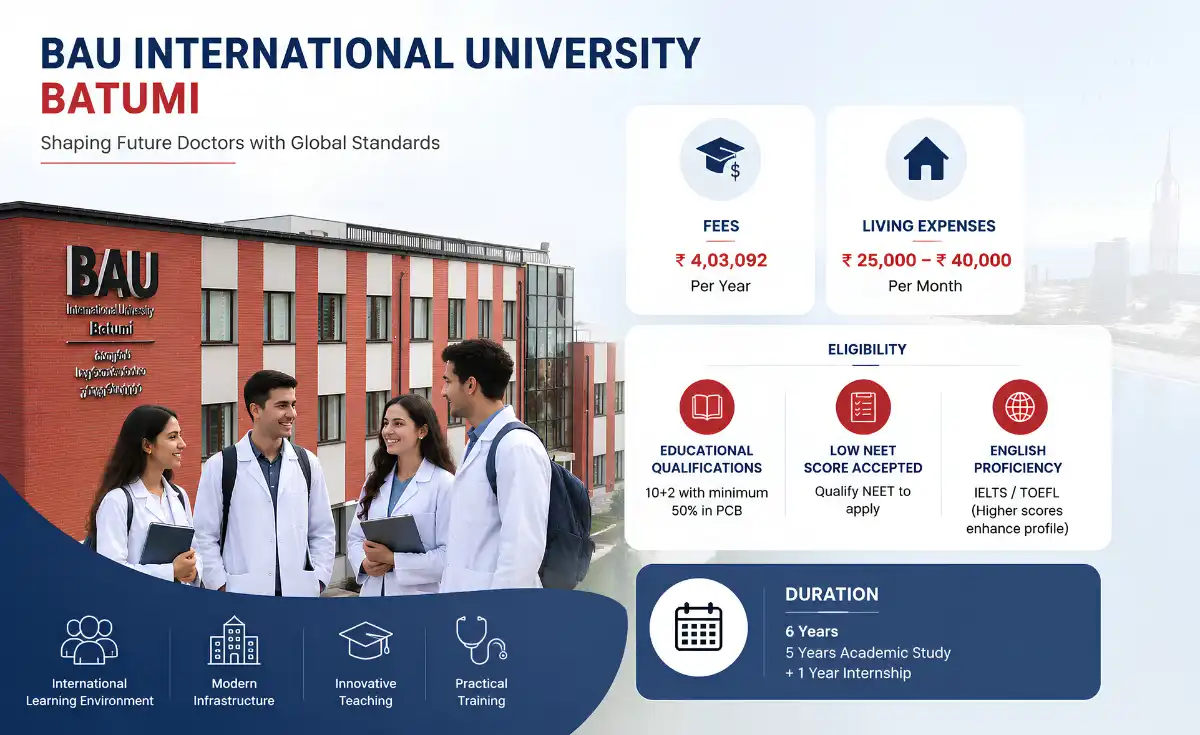
BAU International University, Batumi, is a very well-known medical university located in the sparkling city of Batumi. It is part of the BAU Global Network, which has campuses worldwide. It ensures a truly international learning experience for students. The university is also known for its modern infrastructure, innovative teaching methods, and emphasis on practical training.
-
Fees
The tuition fees for the MBBS program at BAU International University, Batumi, are comparable to those of other international institutions. On average, the annual tuition fee is approximately ₹ 4,03,092 per year.
Additionally, students’ living expenses can range from ₹ 25,000 to ₹ 40,000 per month. This significantly depends on the student’s lifestyle and accommodation choices.
-
Eligibility
- Educational Qualifications
Individuals must have secondary education (10+2) with a minimum of 50% marks in PCB.
-
Low NEET Score Accepted
Indian students must qualify for the National Eligibility cum Entrance Test (NEET) to apply for MBBS programs abroad.
-
English Proficiency
It is not mandatory that you must have a good score on the English proficiency test. However, having higher scores in IELTS or TOEFL can enhance your profile.
-
Duration
The MBBS program at BAU International University, Batumi, spans six years. It includes five years of academic study and one year of internship or clinical practice.
2. European University, Georgia
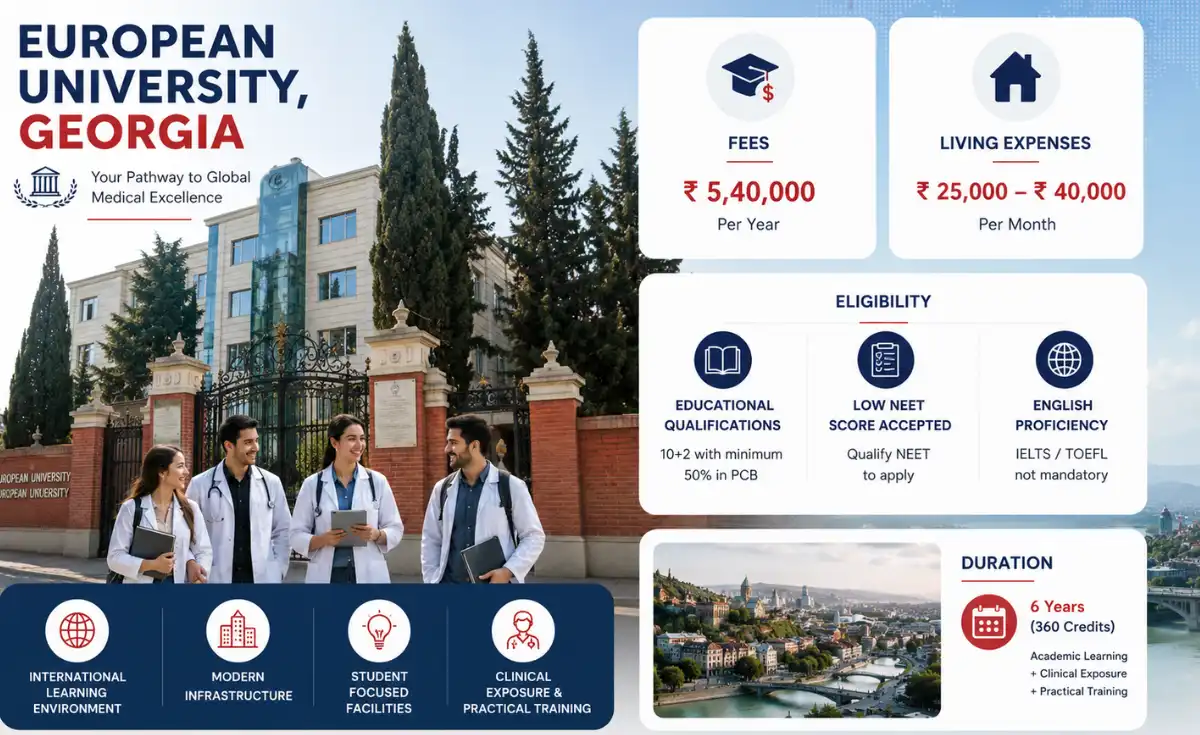
European University, Georgia, is a recognized medical university located in Tbilisi, the capital city of Georgia. The university offers an English-medium Medical Doctor program for international students and is known for its structured academic system, modern learning environment, and student-focused facilities. Its medical program follows a 6-year study model with 360 credits, giving students a complete pathway for medical education in Georgia.
-
Fees
The tuition fee for the medical doctor program at European University, Georgia, is approximately USD 6,500 per year. In Indian currency, this comes to around ₹5,40,000 per year, depending on the current exchange rate.
Additionally, students’ living expenses may range from ₹25,000 to ₹40,000 per month. This mainly depends on accommodation type, food preferences, transport, and personal lifestyle choices.
-
Eligibility
The eligibility criteria for medical students in Georgia are simple and student-friendly. You must meet the following criteria to apply for the MBBS program at European University, Georgia.
-
Educational Qualifications
Students must have completed secondary education, which means 10+2 with physics, chemistry, and biology. A minimum of 50% marks in PCB are usually required for general category students.
-
Low NEET Score Accepted
Indian students must qualify for the National Eligibility cum Entrance Test, NEET, to apply for MBBS programs abroad. A high NEET score is not always required for admission, but qualifying for NEET is important for Indian students who wish to practice in India later.
-
English Proficiency
A good score in IELTS or TOEFL is not usually mandatory for Indian students. Since the Medical Doctor program is taught in English, students should have a basic understanding of English to follow classes, communicate well, and adjust comfortably.
-
Duration
The Medical Doctor program at European University, Georgia, spans six years. The program includes academic learning, medical science subjects, clinical exposure, and practical training. It carries 360 credits and is designed to prepare students for future medical practice and licensing pathways.
Advantages of Studying MBBS in Georgia
Studying MBBS in Georgia has its own benefits. Apart from accessibility and affordability, it offers a safer environment, diverse cultural heritage, hands-on clinical exposure, and many other opportunities for an aspirant. Here are some of the advantages.
- Diverse Student Community: Georgia is a country filled with cultural richness. It hosts students from all over the world. Not only does it create a multicultural environment for students, but it lets them foster global relationships and networks.
- Clinical Exposure: BAU International University, Batumi, and Avicenna Batumi Medical University provide ample clinical exposure. It allows students to gain practical experience in hospitals and healthcare settings. This fosters better learning among students.
- Research Opportunities: While studying, you are not confined to just one thing. Students have access to numerous research opportunities. It enables them to contribute to medical advancements and enhance their learning.
- Gateway to Europe: Doing MBBS in Georgia opens doors to the rest of the European Union. It allows students to travel and explore new cultures and healthcare systems.
- Career Prospects: Thanks to the comprehensive curriculum and practical training, graduates from Georgian medical universities are well-prepared to pursue careers in medicine globally.
How to Apply for an MBBS Program in Georgia
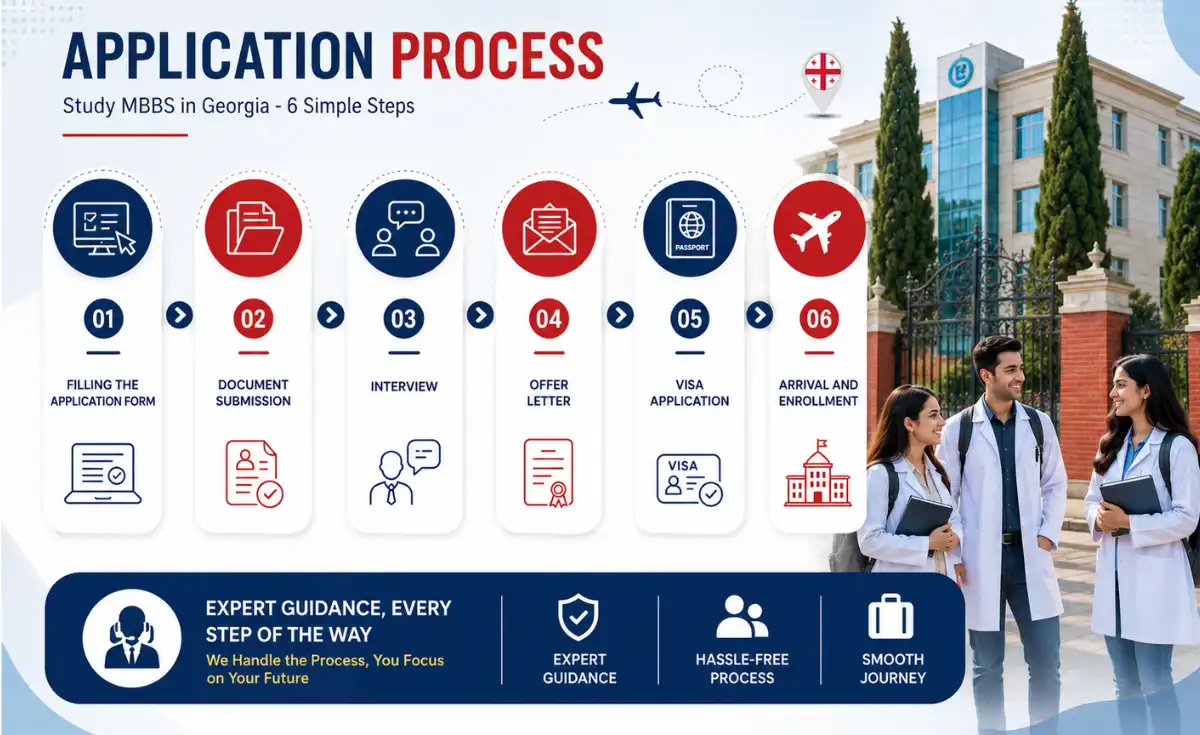
Applying for an MBBS Program in Georgia involves a few key steps, from submitting your application and documents to completing the visa and university enrollment process. The exact requirements may vary by university, but the general process is as follows:
| Step | Application Stage | What You Need to Do |
|---|---|---|
| Step 1 | Filling the Application Form | Complete the application form online through the university’s official website. |
| Step 2 | Document Submission | Submit required documents such as academic transcripts, NEET scorecard, passport copy, and proof of English proficiency. |
| Step 3 | Interview | Some universities may conduct an interview to assess your suitability for the program. |
| Step 4 | Offer Letter | After successful evaluation, the university will issue an offer letter. |
| Step 5 | Visa Application | After receiving the offer letter, apply for a student visa to study in Georgia. |
| Step 6 | Arrival and Enrollment | Travel to Georgia after receiving the visa, complete enrollment formalities, and begin your studies. |
You can consult with the best visa consultants in India. They can take your hectic work, and ensure your smooth journey.
Conclusion
Choosing the right MBBS Program in Georgia requires students to compare tuition fees, eligibility criteria, course duration, clinical training, university facilities, and admission requirements. Indian students should also check the applicable NEET and NMC requirements before applying.
With the right university and proper planning, students can better understand their study options and prepare for their medical education abroad. HSA EduWorld can help students compare Georgian medical universities, understand eligibility and fees, complete documentation, and navigate the admission process.
Ready to explore your options? Connect with HSA EduWorld today and take the next step toward your MBBS journey in Georgia.

 Education